
Headsets are an excellent accessory for your amateur radio station. There are so many to choose from it might seem overwhelming to pick one. They come in large sizes to small and work with some radios while not with others. This is a description of the process I used to select my headset in the hopes it will help others decide if, when and which headsets they should consider.
Month: October 2008
Radio Station Layout Examples
There is no better way to think of ways to organize your ham shack than to see how others organize theirs.
The 43 foot vertical – The answer to everything?
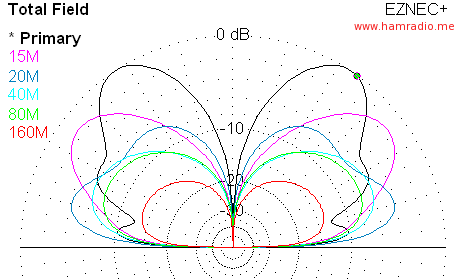
The 43 foot vertical antenna is a popular height being promoted by several antenna manufacturers for 160 to 10 meters. Let’s see why and examine some advantages and pitfalls.
Low Profile Vertical HF Antenna
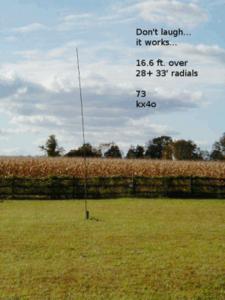
With the upcoming solar cycle pushing operations on the HF bands towards success on 20 meters to 10 meters you might be wondering if a vertical antenna may be the right choice for making the most of this time.
Well, to be honest you may well have just as much success with a simple horizontal dipole strung up.
Dipoles are pretty easy to build and don’t cost too much if you would rather purchase one from Alpha-Delta or the Wireman.
However, if you…
Your First CW Contact
FISTS and other amateur radio organizations exist to help you become proficient at CW and get you past your terrifying first CW QSO.
CW Common Abbreviations
As you begin your adventure sending and receiving Morse code on the HF bands you will almost instantly hear a variety of short hand abbreviations. Many are obvious while others aren’t.
CW works well with these abbreviations and may even lend themselves to cell phone text messaging since both systems benefit from sending fewer characters.
Two radios on one power supply cause problem
A viewer has a problem powering two radios from one power supply.
This situation is quite likely very common among amateur radio operators who keep a simple shack set up with one large power supply feeding multiple loads.