Mast Mountable J-Pole Antenna
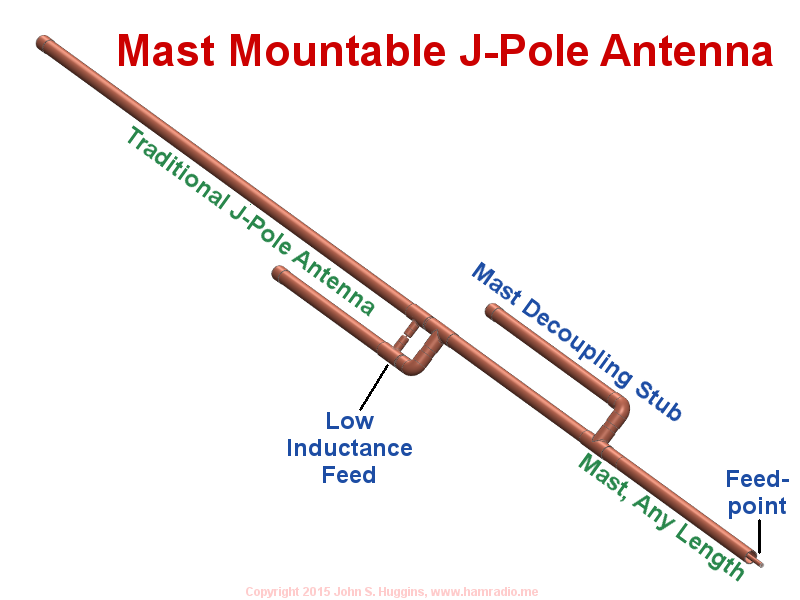
The J-Pole antenna’s long and storied design history is due for one more chapter to mitigate the longstanding mast current and reliability issues.
Ham Radio . Magnum Experimentum
Antennas, experiments, engineering and other articles of interest to radio folks.
Simulations and testing are shown in these articles about ham radio, and a few other, antennas.
The J-Pole antenna’s long and storied design history is due for one more chapter to mitigate the longstanding mast current and reliability issues.
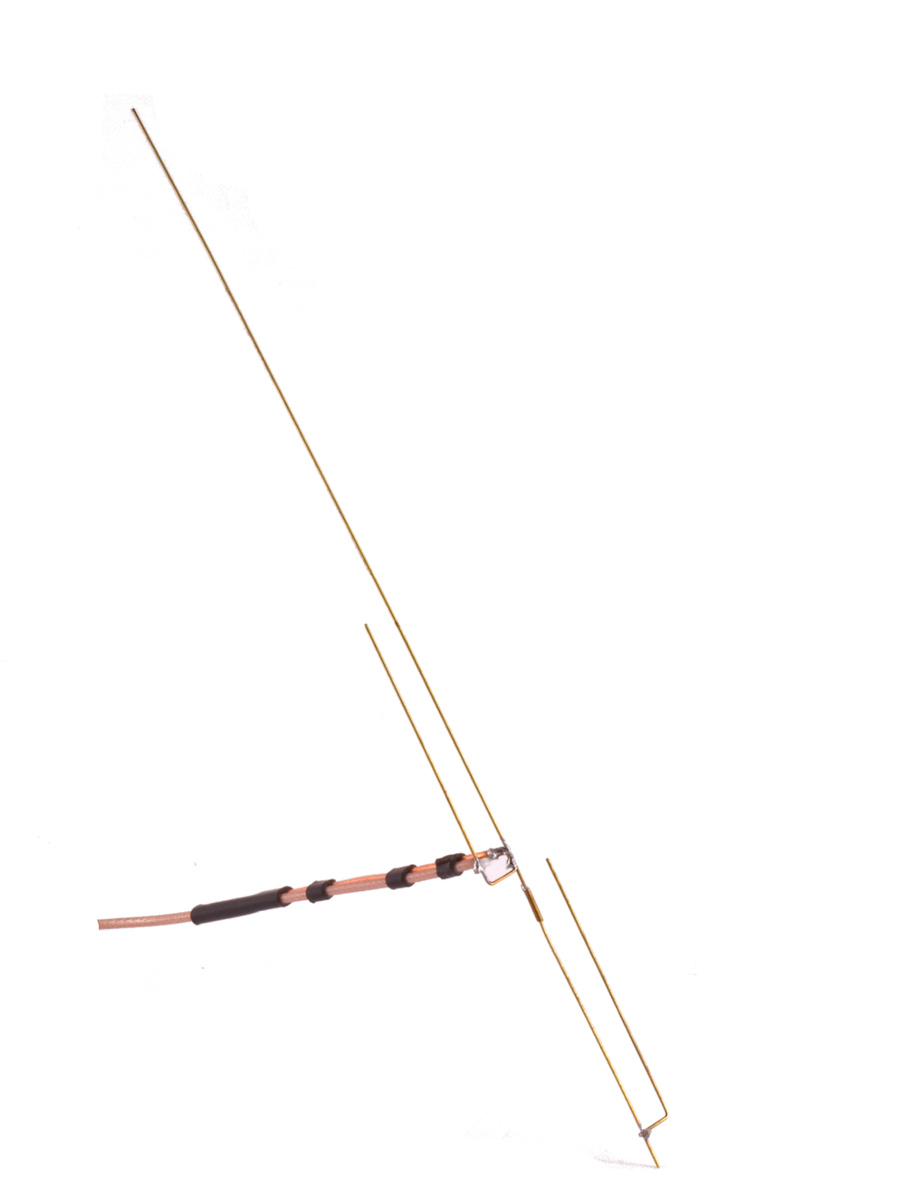
Tame the predictable mast currents found in any j-pole antenna grounding conductive mast using a simple stub. Shown is empirical evidence why this is a problem and a very simple solution all future grounded j-pole antennas should incorporate.
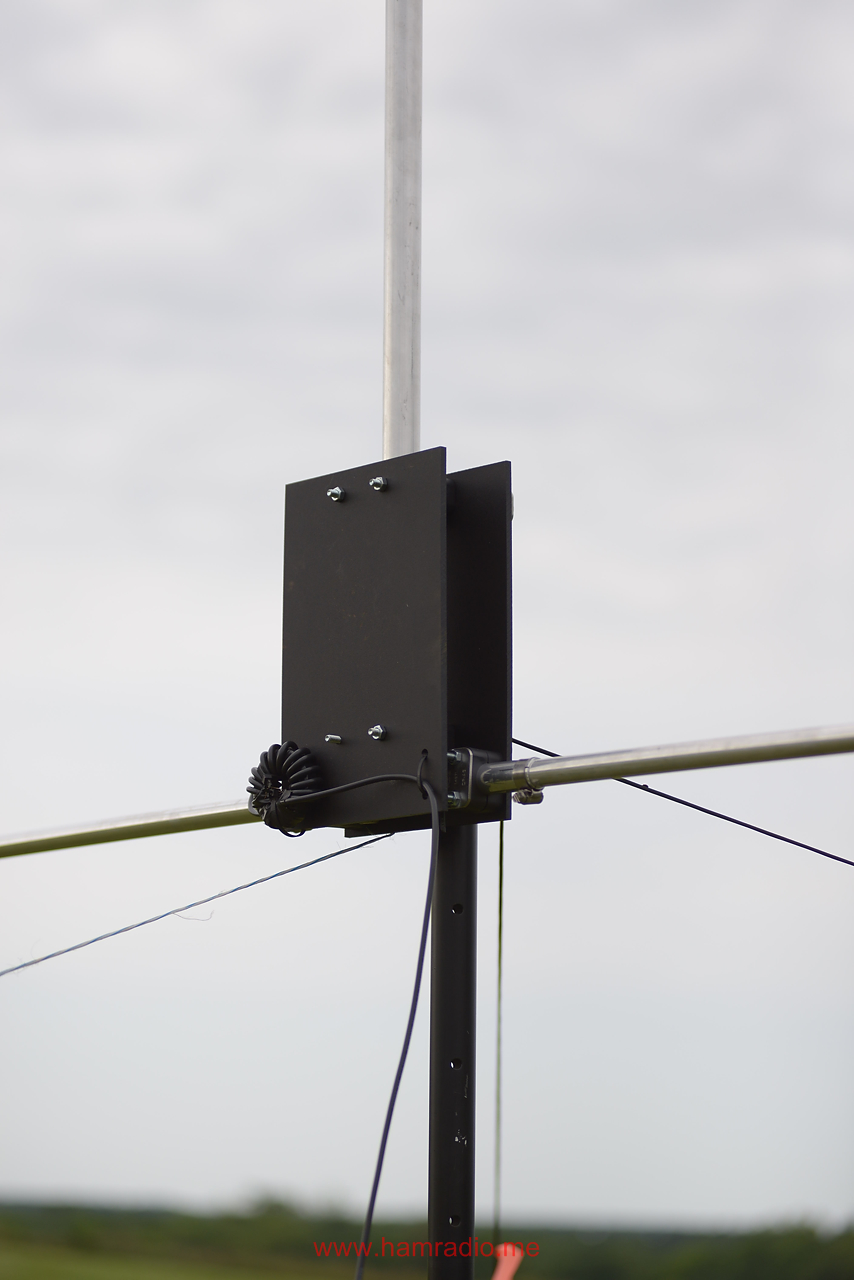
Shown is a better configuration to fasten a choke to the Asymmetrical Hatted Vertical Dipole antenna.
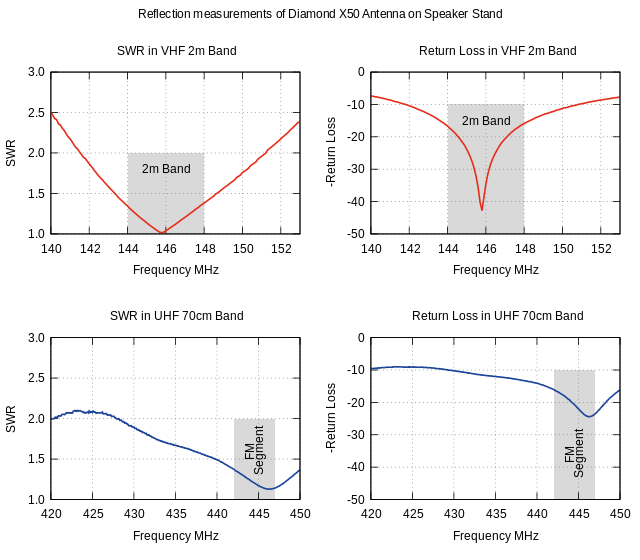
I measured the SWR and Return Loss of a loaner Diamond X50 antenna.
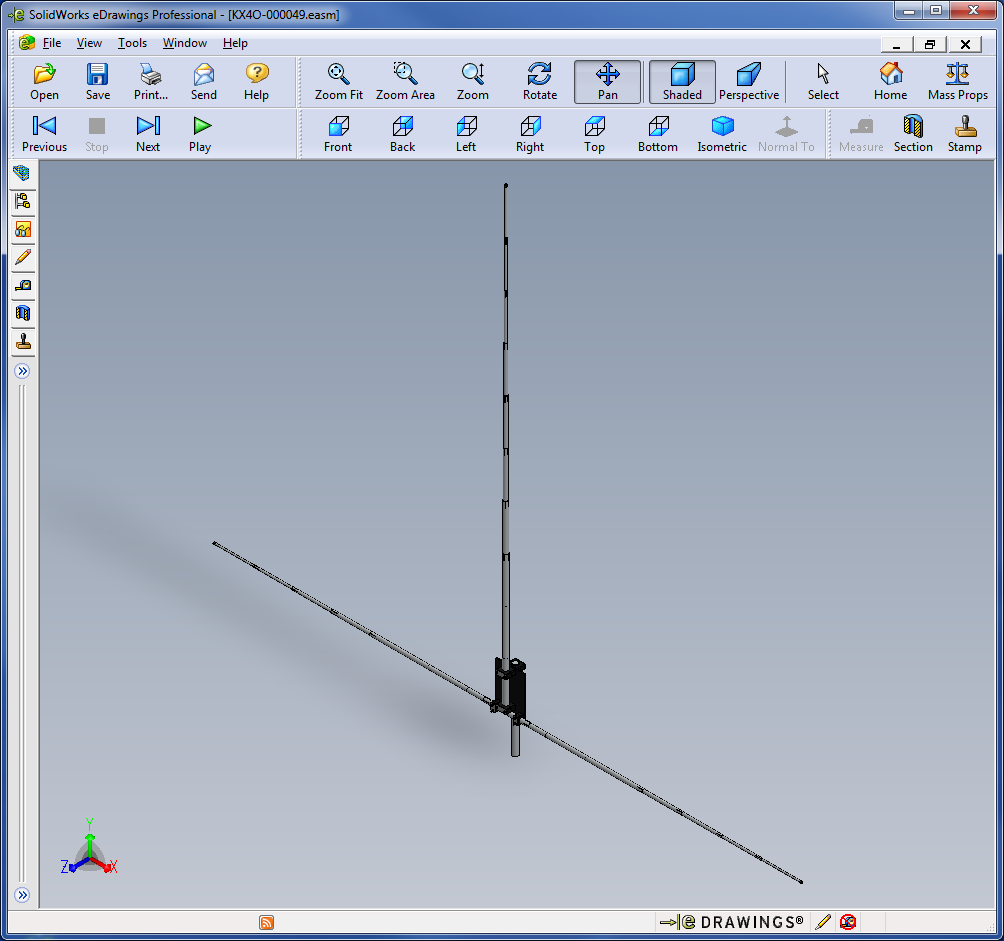
Presented is a 3D E-Drawings rendering of the Asymmetrical Hatted Vertical Dipole antenna.
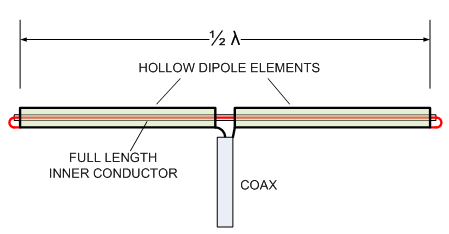
G4CQM provides details on a Yagi-Uda coaxial dipole driver approach for designers lusting after a 50 ohm self-balancing feed.
You need an antenna with energy at high take off angles to hit the hill top repeaters… right? Well, not likely. Let’s review the details and do the math to understand what’s needed for VHF terrestrial radio communication.
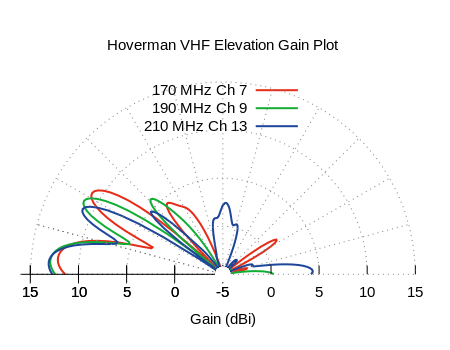
Doyt Hoverman’s 1960s TV antenna design placed over a simple reflector screen provides impressive performance for today’s UHF and VHF-HI television bands.
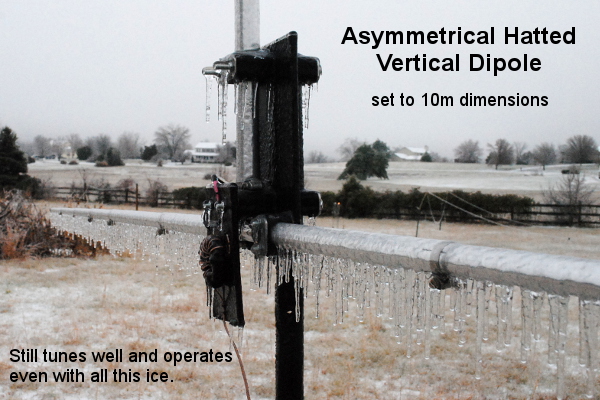
The Asymmetrical Hatted Vertical Dipole (AHVD) worked quite well for some 10m contacts even with a load of ice on the elements.
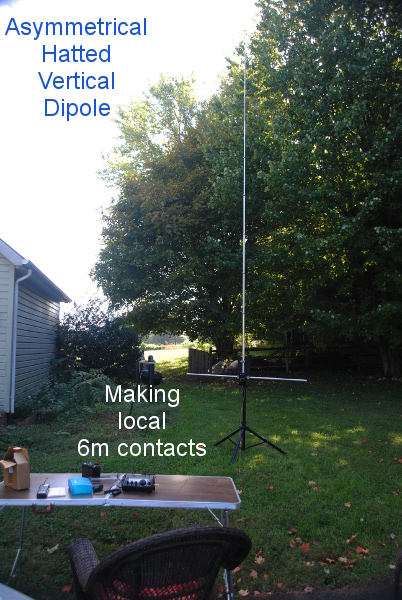
Will the KX4O version of the 20-10m Asymmetrical Hatted Vertical Dipole work on 6m? Yes, sort of.
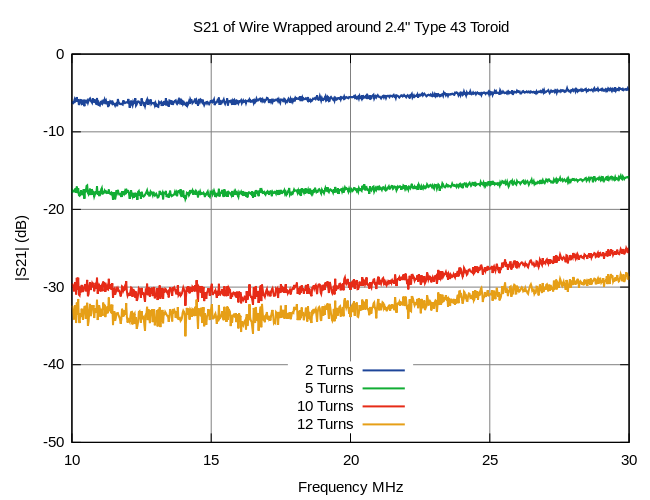
Jim (K9YC) Brown’s toroid winding recipes provide a superb RF choke balun for 30-10m using RG316 and a #43 toroid.
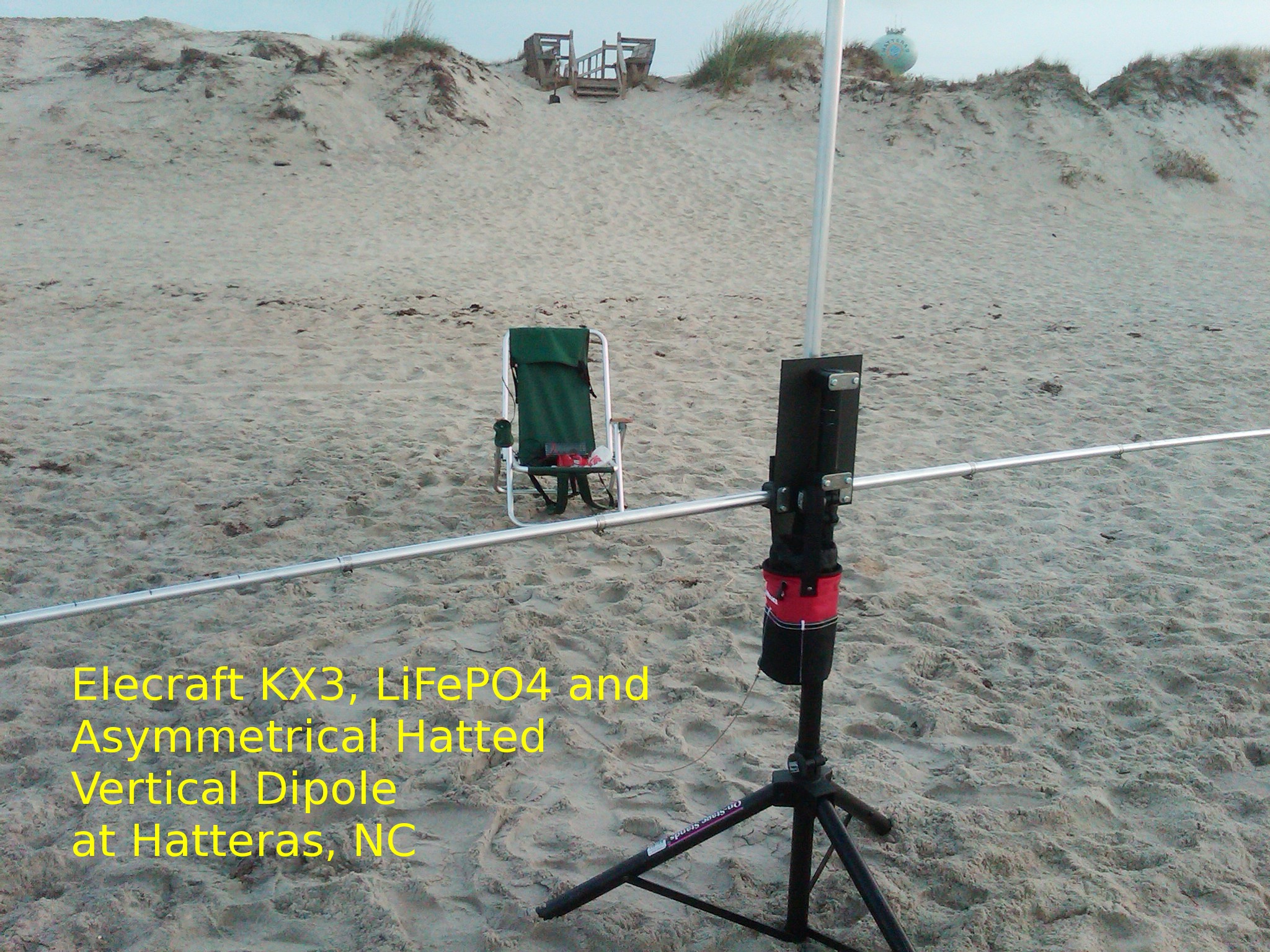
I took the asymmetrical hatted vertical dipole to Hatteras beach to activate NA-067. I wasn’t very successful, but made a couple QSOs. Despite mixed results, the setting was spectacular. The vertical dipole worked.
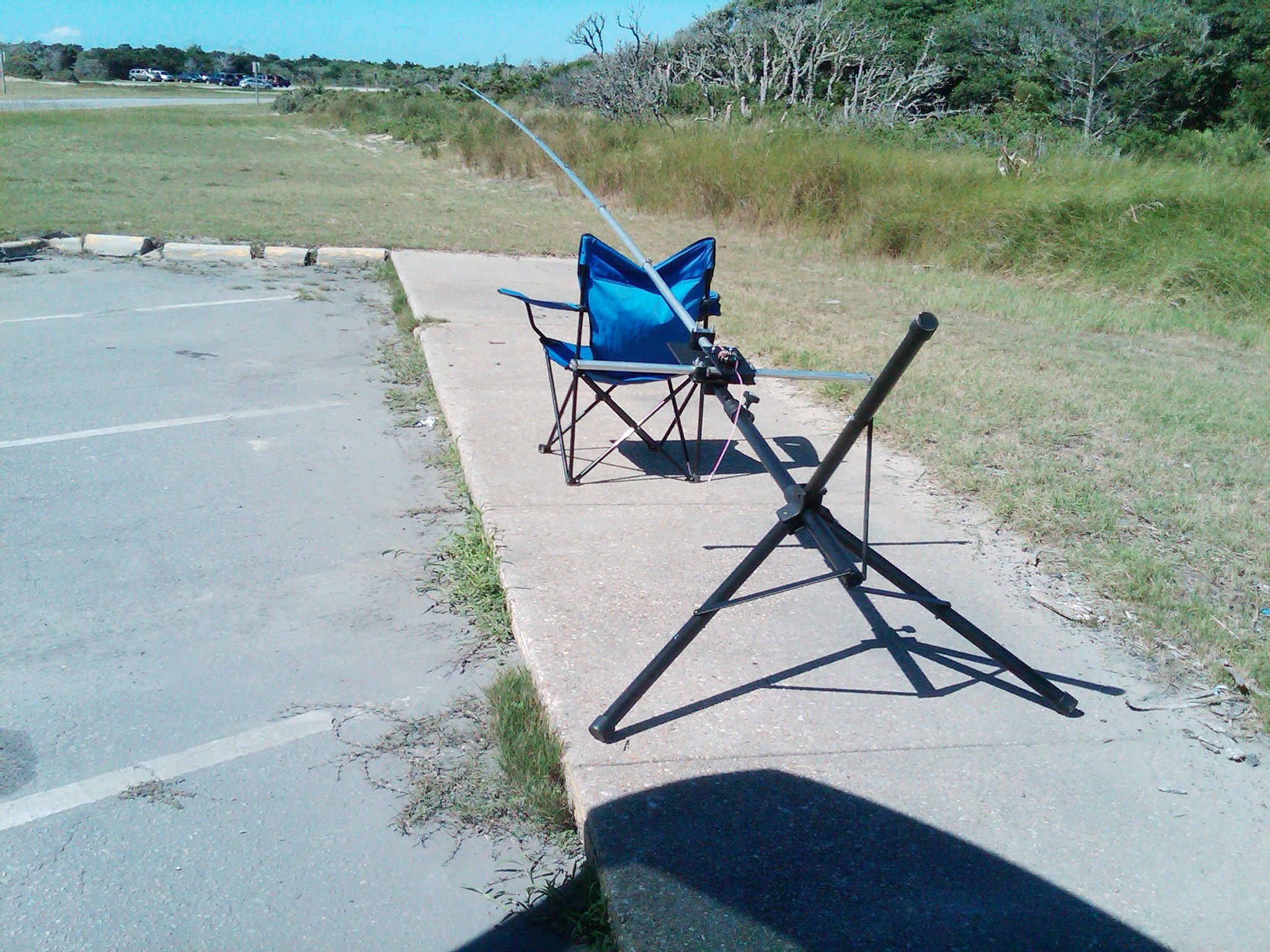
The asymmetrical hatted vertical dipole (AHVD) provides a quick setup HF antenna at Hatteras lighthouse.
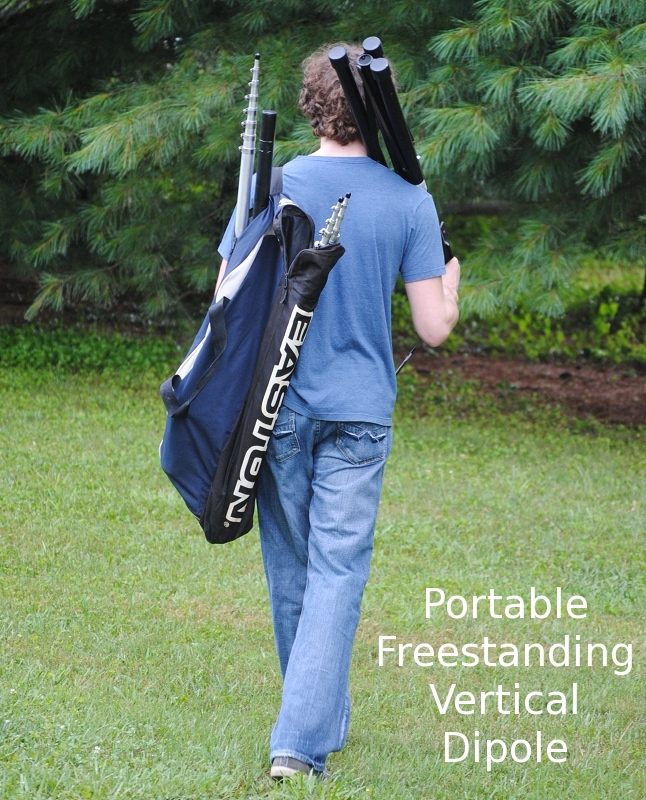
The Asymmetrical Hatted Vertical Dipole (AHVD) prototype is an easy to build, portable alternative to other freestanding vertical HF antennas such as the Buddipole.
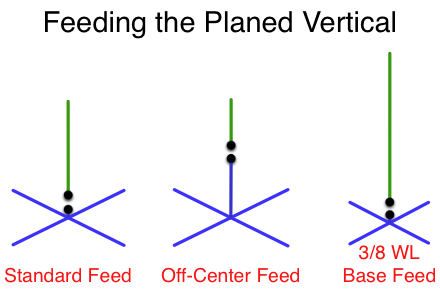
We re-introduce the theory and origins of Cebik’s (W4RNL) Asymmetrical Hatted Vertical Dipole (AHVD) antenna with the hope to facilitate a vertical polarization portable 20-10m aerial for portable operations.
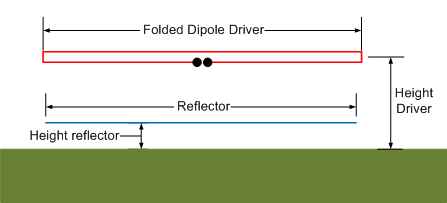
Yet another 40m Cloud Burner design featuring a folded dipole driven element plus one reflector wire to facilitate 40m NVIS contacts without need of a tall mast. The design uses electric fence posts for support and needs no balun.
In the name of science I cut the wire laying on the ground underneath my 40m fullwave horizontal loop to see what would happen.
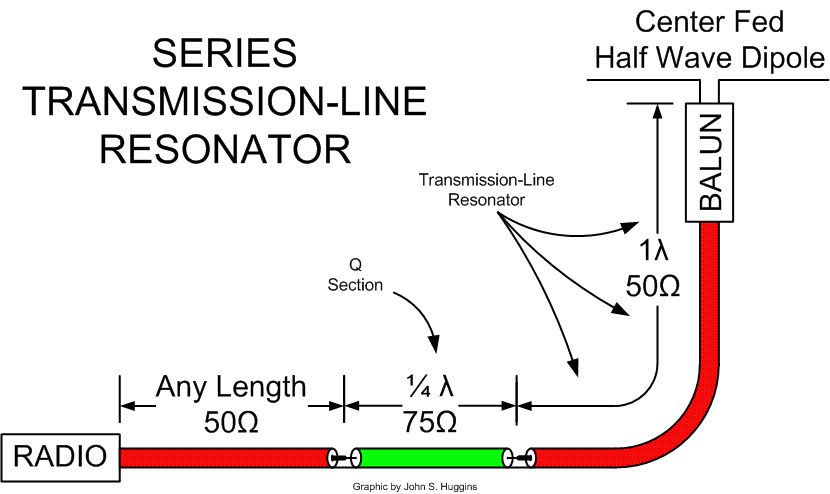
A 1/4 wavelength of 75 ohm coax inline with a full wavelength of 50 ohm coax is all one needs to make a simple 80m dipole become a wideband dipole antenna.
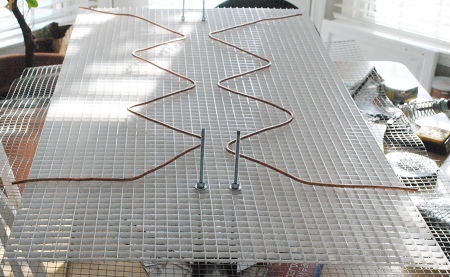
Build the venerable Hoverman TV antenna and watch digital broadcast high definition HDTV television this weekend. This version of a HDTV antenna uses amateur radio antenna building techniques to make a lightweight structure.
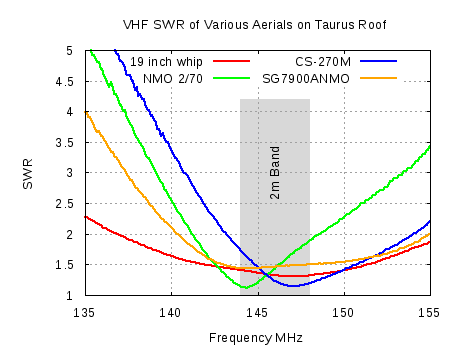
I had occasion to test four popular amateur radio mobile antennas. Here are the results of SWR and Return Loss of a Diamond SG7900ANMO, Larsen NMO 2/70, Cushcraft CS-270M and Laird QW144.
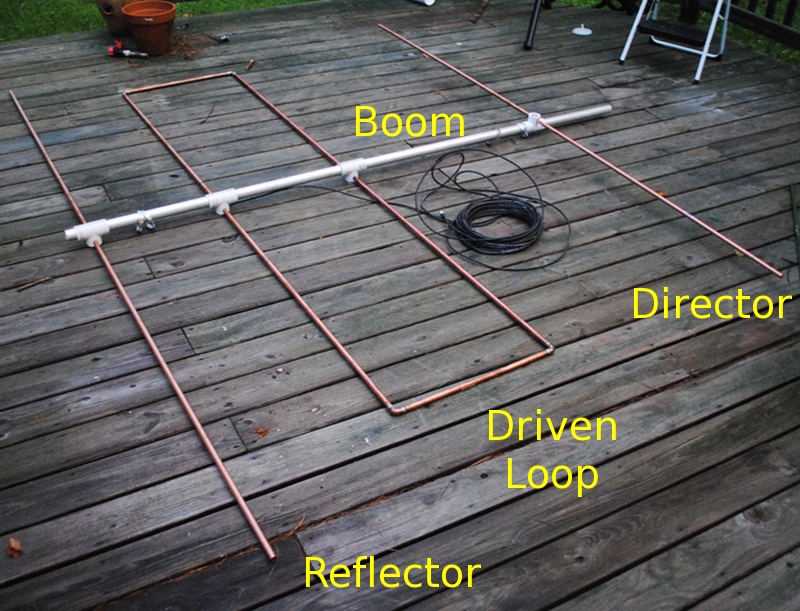
This final installment about the 6m LFA Yagi Antenna shows the technique to hold copper pipes to the boom using home center PVC plumbing materials.
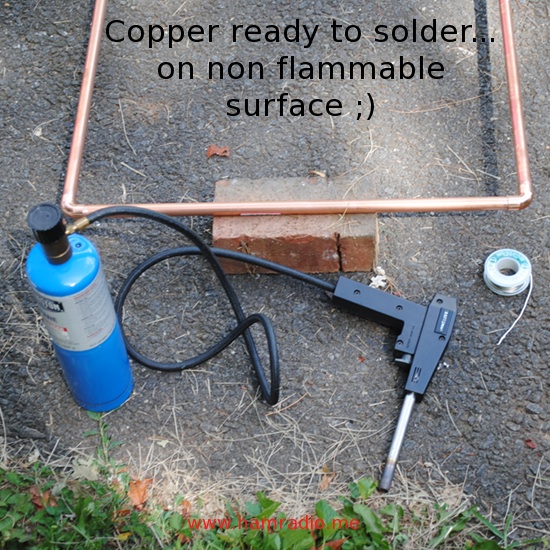
Here is a step by step photo album showing how I prepared home center copper pipe for use in a three element Loop-Fed-Array Yagi-Uda antenna (aka LFA Yagi Antenna).
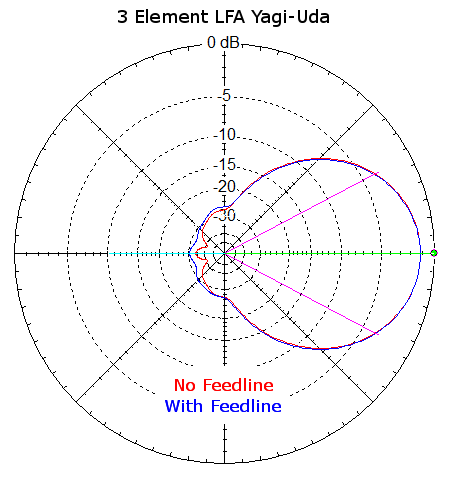
The Coplanar Loop Fed Array (LFA) Yagi-Uda design from G0KSC provides an excellent design foundation for an all copper version of a 3 element 6m balunless beam with superior front to back performance. Shown are comparisons between model simulations and prototype measurements.
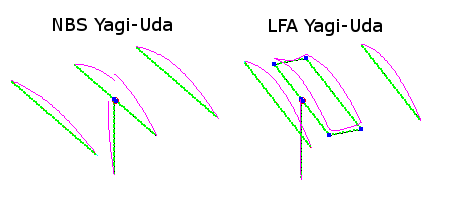
The clever application of the folded dipole loop, computer science iteration techniques and NEC simulation to Yagi-Uda design results in a panoply of practical planar Loop Fed Array, LFA Yagi antenna recipes.